


Back to Top
Bikepacking FAQ
- June 08, 2026
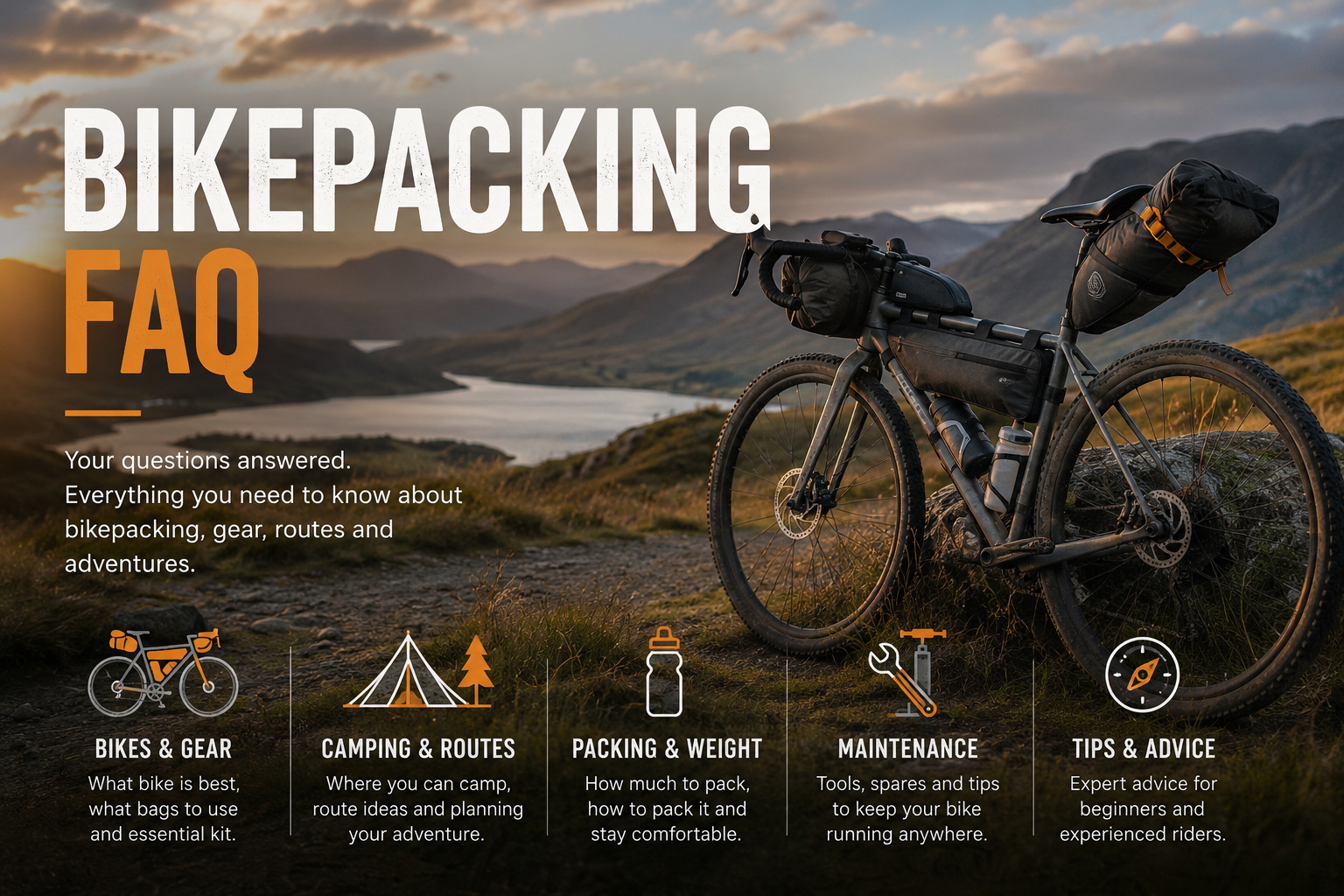
Bikepacking Frequently Asked Questions
New to bikepacking? This guide answers some of the most common questions about bikepacking bikes, equipment, routes, luggage, camping, and long-distance cycling adventures.
What is bikepacking?
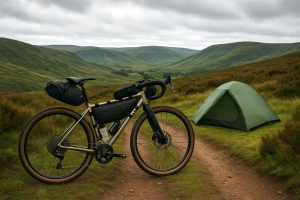
Bikepacking combines cycling and lightweight camping, allowing riders to travel long distances carrying everything they need on their bike. Unlike traditional cycle touring, bikepacking typically uses lightweight luggage attached directly to the bike rather than panniers and racks.
What is the difference between bikepacking and cycle touring?
Bikepacking generally focuses on:
- Lighter equipment
- Off-road routes
- Gravel tracks and trails
- Soft bike luggage
Cycle touring often uses:
- Panniers
- Rear racks
- Road-based routes
- Larger carrying capacity
What bike is best for bikepacking?
Many bikes can be used for bikepacking, including:
The best choice depends on the terrain and duration of your trip.
Can I go bikepacking on a mountain bike?
Yes. Hardtail mountain bikes are among the most popular bikepacking bikes because they offer comfort, durability and the ability to tackle rough terrain.
Can I go bikepacking on a gravel bike?
Absolutely. Gravel bikes are ideal for mixed-surface routes combining roads, bridleways, forest tracks and gravel trails.
How many miles can you bikepack in a day?
Typical daily distances are:
| Rider Type | Distance |
|---|---|
| Beginner | 20-40 miles |
| Intermediate | 40-70 miles |
| Experienced | 70-120+ miles |
Distance depends on terrain, luggage weight, weather and fitness.
What should I pack for a bikepacking trip?
Essential bikepacking gear includes:
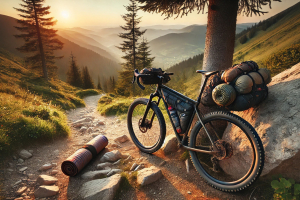
- Shelter (tent, bivvy or hammock)
- Sleeping bag
- Sleeping mat
- Water bottles or hydration pack
- Multi-tool
- Spare inner tubes
- Pump
- Waterproof clothing
- Lights
- GPS device or maps
- First aid kit
How much weight should I carry when bikepacking?
Many experienced bikepackers aim to keep total luggage below 10-15kg excluding water. Lighter setups are generally more comfortable and efficient.
What are bikepacking bags?
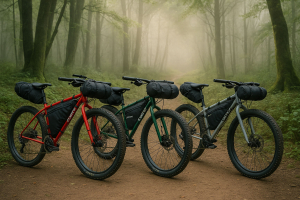
Bikepacking bags attach directly to the bike and commonly include:
These bags eliminate the need for traditional pannier racks.
Do I need a rack for bikepacking?
No. Most modern bikepacking setups use rackless luggage systems. However, rear racks can still be useful for longer trips or carrying extra equipment.
What tyre size is best for bikepacking?
Popular bikepacking tyre sizes include:
- 700x40c to 700x50c gravel tyres
- 27.5 x 2.1" to 2.6" mountain bike tyres
- 29 x 2.2" to 2.6" mountain bike tyres
Wider tyres generally provide greater comfort and traction on rough terrain.
What tyre pressure should I use for bikepacking?
Bikepacking usually benefits from slightly lower tyre pressures than normal riding because of the additional luggage weight and rougher terrain.
Is tubeless worth it for bikepacking?
Yes. Tubeless tyres reduce the likelihood of punctures and allow lower tyre pressures, making them a popular choice for long-distance bikepacking trips.
How much water should I carry?
This depends on temperature and route conditions. Most riders carry between 2 and 5 litres of water and plan refill points in advance.
Where can I camp while bikepacking in the UK?
Camping rules vary:
- Scotland allows wider access under the Scottish Outdoor Access Code.
- England and Wales generally require permission unless using official campsites.
Always check local regulations before travelling.
Is wild camping legal in the UK?
Wild camping laws differ throughout the UK. Scotland generally allows responsible wild camping, while England and Wales have more restrictions.
What are the best UK bikepacking routes?
Popular routes include:
- King Alfred's Way
- South Downs Way
- Rebellion Way
- West Kernow Way
- Cairngorms Loop
- Badger Divide
Do I need special clothing for bikepacking?
Comfortable cycling clothing combined with lightweight waterproof layers is usually sufficient. Layering is more important than specialist bikepacking-specific clothing.
How do I charge my phone or GPS while bikepacking?
Many riders use:
- Power banks
- Dynamo hubs
- Solar chargers
- Campsite charging points
Is bikepacking expensive?
Bikepacking can be surprisingly affordable. Many riders begin using equipment they already own and upgrade gradually as they gain experience.
What is the best beginner bikepacking setup?
A simple beginner setup might include:
- Existing mountain bike or gravel bike
- Saddle bag
- Handlebar bag
- Small frame bag
- Basic camping equipment
There's no need to spend thousands of pounds to start bikepacking.

Share on Facebook

Share on X

Share on Pinterest
Recent Posts
